
First Responders & Military Treatment

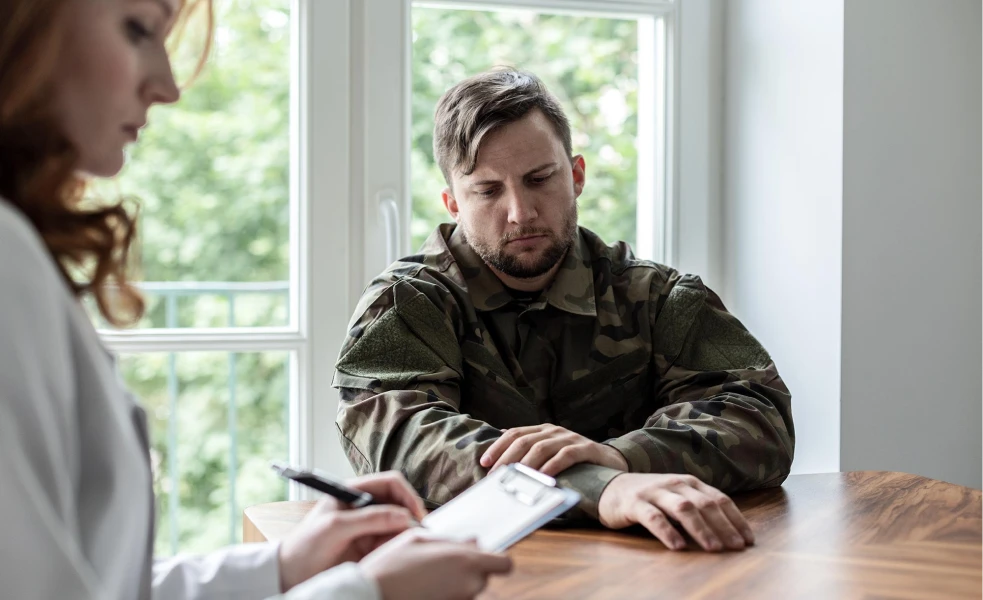
Our first responder rehab program is outpatient addiction treatment built for people who work shifts. Firefighters, police officers, EMTs, paramedics, dispatchers, and corrections officers come to us in San Antonio for structured care that fits around a duty schedule instead of asking them to disappear from it.
You can start at the level of care that matches what is going on, step down as things steady out, and keep working through most of it. We handle the substance use and the trauma underneath it at the same time, because for this line of work the two usually travel together.
Care is outpatient, so most people keep working. We offer PHP, IOP, virtual IOP, and online mental health IOP.
Substance use and trauma get treated together, not one after the other.
What we share with an employer or a licensing board is limited to what you put in writing, with narrow legal exceptions.
Our team will check your benefits before you commit to anything, including TRICARE and TriWest plans.
Talk with someone who gets it
Our admissions team can walk you through your options and start a benefits check whenever you are ready.
Verify your benefits Call 210-334-0098Your conversation with us is confidential and protected under HIPAA.
What Our First Responder Rehab Program Includes
Every plan starts with an assessment. We look at what you are using, how your body is handling it, what is going on with your mental health, and what your schedule and job actually allow. From there we recommend a level of care and build the week around it.
Care is therapy-led. You get individual sessions, group work, and family involvement if you want it. If withdrawal is a safety concern, we start with medically supervised detox and move into outpatient care from there. Where medication is part of the picture, a physician directs it as part of your plan rather than as a substitute for one.
We do not run a residential facility. Everything here is outpatient or virtual, which is exactly why it works for people who cannot vanish for a month without their department noticing.

Levels of Care
Levels of care differ in how many hours a week they ask of you and how much medical oversight comes with them. We match care to clinical need first, then work the schedule around it.
| Level of care | Setting | Working through it | What the week looks like |
|---|---|---|---|
| Medically supervised detox | Monitored withdrawal with nursing oversight | Time off needed | Withdrawal monitoring, physician-directed medication management, and a plan for what comes next |
| Partial Hospitalization Program (PHP) | Daytime program at our San Antonio location | Usually needs leave | Full days of group and individual therapy with clinical oversight, our most structured outpatient option |
| Intensive Outpatient Program (IOP) | Group sessions at our San Antonio location | Yes, for most | Group therapy, individual sessions, and relapse-prevention work while you hold most of your duties |
| Virtual IOP | Secure video groups and teletherapy | Most flexible | The same IOP work from home or off shift, useful when you are rotating or driving in is not realistic |
| Online IOP for mental health | Secure video, available across Texas | Most flexible | For anxiety, depression, and trauma symptoms when mental health is the primary concern rather than substance use |
Who This Program Is For
Our first responder program is for current and former public-safety professionals in the San Antonio area and across Texas. If the job has become something you need a drink or a pill to get through, or to come down from, you are the person this was built for.
Roles We Work With
- Firefighters, including volunteer and part-time, with schedules built around 24 and 48 hour shifts.
- Police officers and sheriff’s deputies, where fitness-for-duty and licensing questions usually come up early.
- EMTs and paramedics, including anyone whose access to medications has become part of the problem.
- 911 dispatchers and telecommunicators, whose exposure is constant even though it is secondhand.
- Corrections and detention officers, plus retired responders still carrying what the work left behind.
What We Treat
Alcohol is the most common reason first responders come to us, often after years of it being the normal way to decompress after a bad call. Prescription medication and opioid use is the next most common, and it frequently starts with a legitimate injury on the job.
- Alcohol use, including heavy drinking that has not yet turned into daily drinking
- Opioid and prescription medication use, including pain medication that stopped being about pain
- Fentanyl and heroin use
- Stimulant use, including cocaine and methamphetamine
- Cannabis use where it is interfering with work, safety, or your family
- Anxiety, depression, and trauma symptoms occurring alongside any of the above

Trauma And Mental Health,
Treated At The Same Time
Substance use in this line of work is rarely the whole story. Repeated exposure to critical incidents wears on people, and drinking or using is often what someone reached for when nothing else was available at 3am after a shift.
We treat both together. Your plan can include trauma-informed care, therapy for anxiety and depression, and a psychiatric consult when it is clinically appropriate. We review how you are doing as we go and adjust the plan rather than running you through a fixed curriculum.
Where mental health is the main concern and substance use is secondary or absent, our online mental health IOP may be the better fit. Our admissions team can help you figure out which door you should be walking through.

Therapies We Use
Our approach leans on therapies with a real evidence base behind them, delivered by people who are used to working with high-stress professions.
 Cognitive Behavior Therapy
CBT gives you practical tools for the thinking patterns that keep the cycle going, usable on shift and at home.
 Dialectical Behavior Therapy
DBT builds distress tolerance and emotional regulation, which matter when your job is other people's worst day.
 Trauma-Informed Care
Shapes how everything else is delivered, so treatment does not become one more thing that happens to you.
 Motivational Interviewing
Helps you get clear on your own reasons for changing rather than borrowing someone else's.
 Rational Emotive Behavior Therapy
REBT works on the beliefs sitting underneath the stress response, not just the behavior on top of it.
 Experiential Therapy
Gets you out of a chair and into activity, which is often where the real work happens for people who talk for a living.
Group therapy and family sessions run alongside individual work. Relapse prevention planning is part of every plan, and for this audience it usually means naming the specific calls, shifts, and situations that put you at risk.
Not sure which level of care you need?
That is what the assessment is for. Our admissions team can talk it through with you and check your benefits at the same time.
Verify your benefits Call 210-334-0098Confidentiality, Your Record, And Going Back On Duty
Most first responders wait too long to ask for help because they are worried about the job, and that worry is reasonable. Here is how it actually works with us.
Your clinical information is protected under HIPAA. We do not send treatment details to your employer, your union, or a licensing board unless you sign a release telling us to. The exceptions are narrow and legally required, such as a situation involving immediate danger, and we will tell you before we take any step like that rather than after.
What We Can Help With
- Records and documentation that you authorize in writing, so the receiving party sees what you agreed to share and nothing more
- Coordinating with an employee assistance program, occupational health, a union representative, or your own attorney when you ask us to
- Scheduling that works around shifts, including virtual options, so you are not choosing between treatment and your job
- Planning for a phased return to your normal duties as part of your treatment plan
We will be straight with you about the limits too. Employment and licensing rules vary by department, agency, and state, so we cannot promise you a particular outcome at work. What we can do is give you accurate information, keep your information private, and document things properly so you are in the strongest position you can be in.
What To Expect When You Reach Out
Getting started is a conversation, not a commitment. Here is the sequence.
- A confidential call or message. You tell us what is going on, we tell you what we offer, and nobody pressures you. Have your insurance card handy if you have it, though you do not need it to talk to us.
- A benefits check. Our admissions team contacts your plan and comes back to you with what they say about coverage. Your insurer makes the final call on benefits, and we will explain what they tell us in plain language before you decide anything.
- A medical and clinical screen. We check for withdrawal risk and anything urgent, which tells us whether you need to start with detox or can go straight into outpatient care.
- A full assessment and your plan. We go through your history, your mental health, your schedule, and your work situation, then build the plan with you. Confidentiality and any return-to-duty questions get addressed here, at the start, not later.
- Starting, and then checking in. You begin at your level of care and we review how it is going with you early on. Plans change, and they should. Family can be part of this if you want them to be.
If you need detox first, that changes the sequence and we will walk you through it. Detox on its own does not resolve addiction, so we plan the step into therapy-based care from the beginning rather than treating withdrawal as the finish line.

Insurance And Payment
We work with many major plans, including TRICARE and TriWest, along with commercial and Medicaid managed care plans across Texas. Our admissions team will check your specific benefits and tell you what your plan says.
Coverage depends on your plan and your insurer’s determination, so we do not guess at it. Verification is free, it does not obligate you to anything, and knowing where you stand before you start is usually a relief.










Working with a plan is not the same as coverage for a specific service. Verification tells you what your plan actually covers.
Our San Antonio Location
We are in the Castle Hills area of San Antonio, on the NW Military Highway corridor, which puts us within reach of departments and agencies across Bexar County and the surrounding area.
Virtual IOP and online mental health IOP are available to people across Texas, which matters if you are serving a smaller department outside the metro and driving in several times a week is not workable.
Why First Responders and Their Families Choose New Day
Outpatient built around a duty schedule
Our whole model is outpatient, from PHP through virtual IOP. Nobody here is going to tell you the only real option is thirty days away from your station.
A full continuum in one place
Detox, PHP, IOP, virtual IOP, online mental health IOP, and sober living aftercare all run under one roof. You are not handed off to a stranger every time your needs change. Sober living is structured housing and peer support rather than clinical treatment, and it works alongside care rather than instead of it.
Trauma and substance use handled together
For this work, treating the drinking without touching what is driving it does not hold. Trauma-informed care runs through the whole program.
Licensed and accredited
New Day Recovery Services is licensed by Texas Health and Human Services and accredited by the Joint Commission. You can read about the clinicians who deliver care on our team page.
Family is part of it
Families carry a lot of this, and they usually know something is wrong long before anyone says it out loud. Our family group meets Tuesdays from 6:00 to 7:30 PM, in person or online.
For families
If someone you love wears a badge or a uniform and you are worried about their drinking or using, you can start the conversation with us instead of with them. Our family group meets Tuesdays, 6:00 to 7:30 PM, hybrid.
Ask about the family groupFrequently Asked Questions
Will my department or my chief find out I am in treatment? +
Not from us, unless you sign a release telling us to share something. Your clinical information is protected under HIPAA. The exceptions are narrow and legally required, such as a situation involving immediate danger, and we will tell you before we take any step like that. If you are using departmental leave or benefits, that process may involve your employer directly, and we can talk through what that looks like before you start.
Can I keep working while I am in the program? +
Many people do. IOP and virtual IOP are designed to fit around a work schedule, and virtual sessions give you the most flexibility if you are rotating shifts. PHP is more intensive and usually needs some leave. If withdrawal is a safety concern, detox comes first and that does require time away. Our admissions team can map your schedule against the options.
Does TRICARE or TriWest cover first responder rehab here? +
We work with TRICARE and TriWest plans, along with many commercial and Medicaid managed care plans in Texas. Whether a specific service is covered for you depends on your plan and your insurer's determination, so we verify it rather than guess. Our admissions team can run that check for you at no cost and with no obligation.
How long does the program last? +
Length depends on your level of care and how things go, and your plan may set limits of its own. PHP is more intensive and typically shorter. IOP runs longer at fewer hours per week. Many people step down through more than one level and then stay connected through aftercare. We will give you a realistic picture at your assessment rather than a fixed number up front.
Do you treat PTSD and trauma, or only substance use? +
Both, together. Trauma-informed care, therapy for anxiety and depression, and a psychiatric consult when clinically appropriate are all part of what we do. Where mental health is the primary concern rather than substance use, our online mental health IOP may be the better starting point, and our admissions team can help you sort out which fits.
Will you help with return-to-duty paperwork? +
We can provide records and documentation that you authorize in writing, and we can coordinate with an employee assistance program, occupational health, a union representative, or your attorney when you ask us to. Employment and licensing rules vary by agency and state, so we cannot promise a particular outcome at work. Ask our admissions team what we can and cannot provide for your situation before you start.
Can my spouse or family be involved? +
Yes, if you want them to be. Family sessions can be part of your plan, and our family group meets Tuesdays from 6:00 to 7:30 PM in person or online. Families can also reach out to us on their own to ask questions, which is often how this starts.
You have spent your career showing up for other people
Call us or start admissions online. We will listen first, explain your options, and check your benefits before you decide anything.
Start admissions Call 210-334-0098New Day Recovery Services · 1931 NW Military Hwy, Suite 204, San Antonio, TX 78213 · Texas HHSC licensed · Joint Commission accredited
Medical & Legal Disclaimer
This page is for general information and is not medical advice, a diagnosis, or a treatment recommendation. Whether a particular level of care is right for you is determined through a clinical assessment. Insurance coverage depends on your plan and your insurer's determination. Employment and licensing rules vary by agency and state, and nothing here should be read as legal advice or as a promise about your job. If you are in crisis, call or text 988 to reach the Suicide and Crisis Lifeline, or call 911 for a medical emergency.